HostGator Review 2026: Is It the Right Web Hosting Choice?
This HostGator review covers one of the biggest web hosting providers, managing over 10 million domains worldwide. HostGator offers reliable hosting with near-perfect uptime, 24/7 customer support, and a one-click WordPress setup suitable for all skill levels. Business owners benefit from its robust infrastructure and feature-rich plans. Exclusive offers are available, including a free domain name and SSL certificate at no additional cost.
In this HostGator hosting review, we evaluate its WordPress hosting plans, pricing, and features for beginners and small businesses.
Our Current Picks for Best WordPress Hosting for Beginners 2026: 17 Tested Options.
✅ Pros:
- Reliable hosting service
- Free domain and SSL
- Easy WordPress setup
- 30-day money-back guarantee
❌ Cons:
- Higher monthly cost
- Too many upsells during purchase
HostGator Review 2026 – Overview
HostGator remains a reliable and budget-friendly hosting solution in 2026, particularly for beginners and small websites. It offers solid uptime, essential security with free SSL certificates, and easy WordPress setup tools. The platform is appreciated for its straightforward interface and generous 45-day refund policy.
However, users should note that promotional pricing is temporary, and renewal costs can be higher, with additional upsells during checkout. While suitable for basic hosting needs, advanced users seeking premium speed or features may prefer other options. Overall, HostGator provides a dependable entry point for new web projects.
See Fastest WordPress hosting👉
What is HostGator?
HostGator is a popular web hosting provider founded in 2002. It offers shared, VPS, dedicated, and WordPress hosting with easy setup, affordable plans, and 24/7 support for personal and business websites.
Company Background & Ownership (EIG / Newfold Digital)
Someone established HostGator in Florida in 2002, and it has changed ownership multiple times before joining its current parent company. Endurance International Group (EIG) acquired HostGator in 2012 for approximately $300 million, as part of a strategy to expand through brand acquisitions while preserving individual company identities.
In 2021, EIG merged with Web.com, resulting in the formation of Newfold Digital through a partnership between Clearlake Capital and Iris Capital. Today, HostGator operates under Newfold Digital, alongside other major hosting brands such as Bluehost and Network Solutions.
Who Should Use HostGator?
HostGator is suitable for users seeking an affordable and straightforward hosting experience. It appeals most to beginners, small businesses, and personal bloggers who want a quick WordPress setup and reliable uptime with no need for deep technical knowledge. The platform’s low introductory prices, simple control panel, and flexible cloud options make it practical for those starting or modestly scaling a website.
However, it may not satisfy users needing top-tier performance, consistent high-speed servers, or enterprise-level support. Renewal costs can rise steeply, and some premium capabilities—like advanced security or speed optimization—often require extra investment. For casual users and cost-focused site owners, though, HostGator provides solid value and convenience.
Who Should NOT Use HostGator?
HostGator isn’t suitable for users who need consistently strong performance, responsive customer support, or transparent billing. It can often frustrate those managing growing or data-sensitive projects because of slower speeds, complex tools, and strict policies. Businesses prioritizing security, reliability, or an easy interface may find better alternatives like Hostinger or Bluehost.
Simple Points:
- Not ideal for high-traffic or rapidly growing websites
- Not recommended for projects handling sensitive or critical data
HostGator Hosting Plans & Pricing
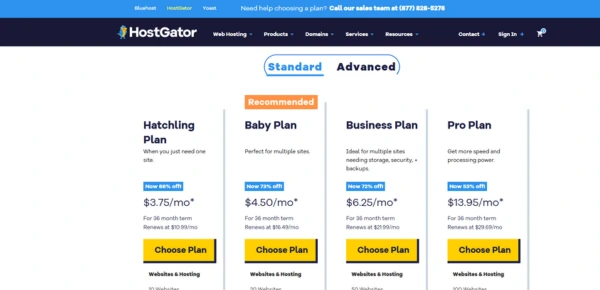
HostGator offers a wide range of hosting solutions, including shared, WordPress, e-commerce, VPS, dedicated, reseller, and cloud hosting, catering to various website requirements.
Here’s the summarized HostGator pricing and plan information presented in a clean table format, including cloud hosting:
Hosting Type | Ideal For | Starting Price (per month) | Renewal Price (per month) | Key Highlights |
Blogs, hobby websites, and small business sites | $3.75 – $5.95 | $10 – $20 | Budget-friendly, basic resources for lightweight sites | |
New bloggers and small businesses using WordPress | $4.50 – $13.95 | $16.49 – $29.69 | Optimized for WordPress performance and management | |
Online stores built on WordPress | $9.95 – $12.95 | $24.95 – $39.95 | Enhanced for product sites and secure transactions | |
Medium to large sites with advanced data needs | $34.99 – $82.99 | $53.99 – $128.99 | Offers scalability, root access, and dedicated resources | |
Large businesses requiring full server control and customization | $144.19 – $344.79 | $191.79 – $401.77 | Maximum control, speed, and security for complex setups | |
Websites need higher uptime and flexible performance | Around $4.50 – $13.95 | $16.49-$29.69 | Combines reliability, scalability, and faster load times | |
Users who want to sell hosting services to their clients | $34.99-$82.99/month | $53.99-$128.99/month | Scalable WHM reseller hosting with 24/7 support |
Shared Hosting
HostGator’s shared hosting targets beginners and small sites needing minimal storage and traffic capacity. It places multiple websites on a common server to share system resources economically.
All shared plans include essential tools like pre-installed WordPress, a free first-year domain, SSL protection, unmetered bandwidth, a 99.9% uptime claim, continuous live chat support, and a basic email option. These plans are most affordable when bought for three years.
Of the tiers, the Baby and Business packages stand out for integrating a content delivery network (CDN) that speeds up global access through cached data. They also allocate limited dedicated resources, including virtual CPU bandwidth, improving stability and performance.
- Pre-installed WordPress for easy setup
- Free domain registration for the first year
- Includes an SSL certificate for security
- Unmetered bandwidth for consistent performance
- 99.9% uptime reliability guarantee
- 24/7 customer help through live chat
- Basic email hosting for a single account
Hosting Plan | Promo Price | Renewal price | Key Features |
Hatchling (Lowest Tier) | $2.75/month | $6.95 – $10.95/month | Single website, pre-installed WordPress, free domain (1st year), SSL, unmetered bandwidth |
Baby (Middle Tier) | $3.95/month | $9.95 – $11.95/month | Unlimited websites, CDN included, limited dedicated resources, and all Hatchling features |
Business (Highest Tier) | $5.95/month | $14.95 – $16.95/month | Priority support, free SEO tools, free dedicated IP, CDN, enhanced resources, all Baby features |
WordPress Hosting

HostGator offers shared WordPress hosting with the platform pre-installed, optimizedfor
multiple virtual CPUs for faster website performance. Users manage WordPress updates, themes, and plugins themselves.
The plans start with the Baby Plan at $4.50 per month for beginners, while the Pro Plan at $13.95 per month provides advanced features and maximum resources for growing websites. Renewal rates are higher, reflecting the plan upgrades and additional benefits.
Hosting Plan | Promo Price | Renewal Rate | Features |
Starter (Lowest Tier) | $4.50/month | $16.49/month | Managed WordPress, automatic updates, free SSL, daily backups, basic support |
Standard (Middle Tier) | $6.25/month | $21.99/month | All Starter features, faster resources, staging environment, improved performance |
Business (Highest Tier) | $13.95/month | $29.69/month | All Standard features, enhanced speed, dedicated IP, premium support, CDN included |
- Provides up to 3 GB of secure backup storage for your site
- WordPress comes pre-installed for quick setup
- Automatic detection and removal of malware threats
- Complimentary security tools to safeguard your website
- Around-the-clock premium support available every day of the year
eCommerce hosting

HostGator’s eCommerce hosting is tailored for online store owners using WordPress. It supports essential SEO tools like Yoast and includes YITH extensions for features such as bookings, wishlists, and gift cards.
These managed plans handle automatic updates and daily backups to simplify store management. Pricing starts at $9.95/month for the Online Store plan, while the advanced Marketplace plan begins at $12.95/month, with standard renewal rates applying.
VPS Hosting
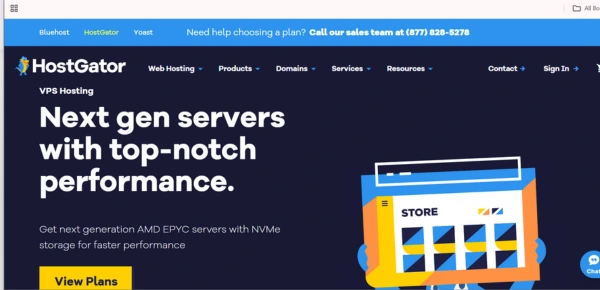
HostGator’s VPS plans provide a dedicated virtual environment, giving users guaranteed resources for smooth and reliable performance. Their entry-level plan starts at $34.99 per month, while the most advanced option costs $82.99 per month.
Even the basic plan comes with features like 120GB of SSD storage and dual-core processors, making it ideal for websites that need more power than shared hosting. The renewal price for these plans is $128.99.
VPS Hosting Plan | Promo Price | Renewal Rate | Key Features |
Snappy 2000 (Lowest Tier) | $23.95/month | $79.95/month | Full root access, SSD storage, scalable resources, 24/7 support |
Snappy 4000 (Middle Tier) | $34.95/month | $119.95/month | All Snappy 2000 features, more CPU & RAM, enhanced performance, priority support |
Snappy 8000 (Highest Tier) | $59.95/month | $149.95/month | All Snappy 4000 features, maximum resources, dedicated IP, and premium support |
Dedicated Hosting
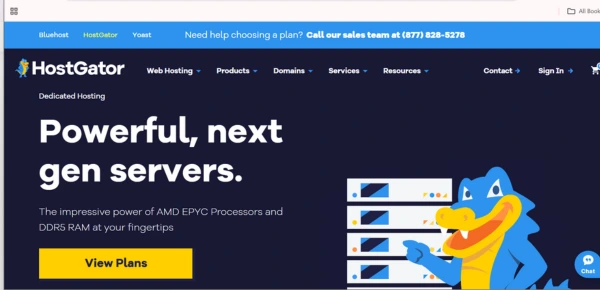
Dedicated hosting provides exclusive access to a complete physical server, allowing users to use all available storage, bandwidth, and processing capacity while maintaining full control over its configuration. HostGator offers multiple dedicated plans to suit different needs, with the Value Server presenting the most cost-effective option and the Enterprise Server catering to those requiring higher performance and resources.
Pricing varies significantly between plans: the Value Server begins at $144.19 per month and renews at $191.79, whereas the Enterprise Server starts at $346.79 per month with a renewal rate of $401.77, reflecting the expanded capabilities and enhanced specifications of the higher-tier plan.
Dedicated Hosting Plan | Intro Price | Renewal Rate | Highlights |
Value Server (Lowest Tier) | $144.19/month | $191.79/month | Entry-level, SSD storage, 24/7 support |
Power Server (Middle Tier) | $241.79/month | $279.39/month | More CPU & RAM, scalable, reliable |
Enterprise Server (Highest Tier) | $346.79/month | $401.77/month | Max resources, high-speed, priority support |
Cloud Hosting
HostGator’s cloud offering lacks the core attributes of genuine cloud infrastructure. Instead of utilizing a network of interconnected servers that share resources and ensure uptime, it relies on a single physical server without virtual separation.
The absence of a distributed architecture means performance and reliability don’t match true cloud environments. The plans fall short in scalability and failover protection—key features users typically expect from authentic cloud hosting solutions.
Cloud Hosting Plan | HostGator Promo Price | HostGator Renewal Rate | SiteGround Price | Highlights |
Lowest Tier | $4.50/month | $16.49/month | $100/month | Entry-level cloud, scalable, managed resources |
Middle Tier | $6.25/month | $21.99/month | $200 – $300/month | More CPU & RAM, faster performance, auto-scaling |
Highest Tier | $13.95/month | $29.69/month | $400/month | Maximum resources, high-speed cloud, priority support |
Reseller Hosting

Reseller hosting is ideal for agencies and freelancers who manage multiple websites or clients. HostGator’s plans let users host unlimited sites, resell hosting at their own rates, and build recurring revenue streams.
The flexible pricing structure allows beginners to start affordably and scale resources as their business expands.
Reseller Plan | Promo Price | Renewal Rate | Highlights |
Aluminum (Lowest) | $34.99/month | $53.99/month | Entry-level reseller, cPanel access, email accounts, basic support |
Copper (Middle) | $53.99/month | $83.99/month | Increased resources, more cPanel accounts, enhanced support |
Silver (Highest) | $82.99/month | $128.99/month | Maximum resources, priority support, advanced reseller features |
Renewal Price After First Year – Hidden Costs Explained
HostGator’s renewal rates increase significantly after the first-year promotional period, with most plans costing two to three times more upon renewal.

In 2026, the Hatchling Plan renews at about $10.99/month, the Baby Plan averages $16.49/month, and the Business Plan ranges from $21.99/month. The complimentary first-year domain renews at $17.99–$39.95 per year, depending on the domain type.
Beyond the hosting fees, several hidden costs can affect total expenses. These include automatic billing at the standard rate if auto-renew is active, a $99.95 domain recovery charge during the redemption period, and a $25 backup restoration fee.
Optional extras like SiteLock and CodeGuard, often pre-checked at checkout, further increase the bill. Premium SSL certificates and dedicated IP addresses also require additional yearly payments, and canceling within the first year triggers a $17.99 domain retention fee.
To reduce renewal expenses, users should disable auto-renewal, deselect nonessential add-ons, and consider transferring their domain to a low-cost registrar after the 60-day registration lock.
HostGator Features & Website Builder
HostGator provides a broad set of hosting-related tools designed mainly for beginners, bloggers, and small businesses.
Its ecosystem focuses on ease of use, bundled essentials, and optional upgrades rather than advanced, fully built-in features. Below is a clean, original, and up-to-date overview strictly aligned with this heading.
cPanel & Dashboard Overview
Cpanel
HostGator combines its custom dashboard with the traditional cPanel, creating an intuitive setup that is suitable for both beginners and experienced users. The dashboard covers essential tasks like SSL setup, WordPress installation, and email or file management, while cPanel hosts more complex configuration options.
This dual system provides flexibility—users can handle quick tasks from the main panel and switch to cPanel for deeper control over domains, databases, and alternative CMS installations through tools like Softaculous. Though cPanel’s layout is user-friendly and widely preferred, absolute newcomers might find Hostinger’s simpler hPanel more approachable.
Dashboard Overview
HostGator’s dashboard allows users to complete account setup, WordPress installation, and basic configurations within minutes. Its design emphasizes ease of use, making it particularly beneficial for non-technical users who wish to handle daily website tasks independently, without relying on developers or external support.
The dashboard streamlines routine website operations, ensuring efficient management of content, updates, and performance monitoring in a single, accessible location.
HostGator Website Builder Review
HostGator includes its proprietary Gator Website Builder aimed at users who want a fast, code-free way to launch a website. It uses a drag-and-drop editor with pre-designed templates optimized for mobile devices.
The builder is suitable for simple business websites, portfolios, and landing pages, but it offers limited flexibility compared to WordPress-based builders. Users can switch to WordPress later if their site needs grow, which adds long-term flexibility despite the builder’s basic nature.
Compared to platforms like WordPress or Wix, HostGator’s Website Builder is more beginner-friendly but less flexible. It is best suited for users who want a simple online presence quickly, while those planning long-term growth or advanced customization may find WordPress a better option.
Email Hosting & Tools Review
Email Hosting

Hostinger’s hosting plans include unlimited professional email accounts, allowing you to create addresses such as info@pvyempire.com.
This improves business credibility and works seamlessly with major email clients like Outlook, Apple Mail, and Gmail, while also providing access through a webmail interface from any browser. Additional features include spam protection, automated responses, and the ability to forward emails to other accounts.
Tools Review
HostGator’s email tools are functional for standard use but may require external solutions for enhanced capabilities. Users seeking advanced email management, robust security, or higher storage limits might need to integrate additional tools to fully meet their needs.
HostGator Domains, Add-ons & Extras

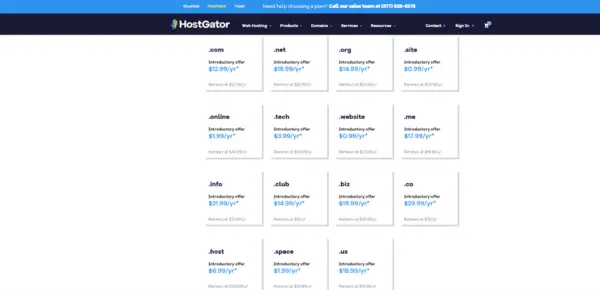
HostGator provides domain registration at low or free rates when purchased alongside other hosting services, typically valid only for the first year. Despite these initial offers, their renewal costs exceed industry averages, making them relatively expensive.
Pricing varies depending on the top-level domain (TLD), with some domains slightly below average and others considerably higher.
TLD | Average Market Price ($) | HostGator Price ($) | |
1 | .biz | 14.56 | 17.99 |
2 | .co | 23.99 | 35 |
3 | .com | 11.57 | 18.99 |
4 | .info | 11.81 | 17.99 |
5 | .me | 12.00 | 19.95 |
6 | .net | 13.61 | 17.99 |
7 | .online | 16.31 | 15 |
8 | .org | 12.09 | 17.99 |
9 | .site | 13.78 | 15 |
10 | .space | 10.86 | 15 |
11 | .store | 24.73 | 35 |
12 | .tech | 21.51 | 30 |
13 | .us | 10.45 | 17.99 |
Add-ons & Extras
HostGator offers several optional add-ons that can increase the total cost of your plan. Domain registration is free for the first year on eligible terms, with typical .com renewals around $23.99/year.
Domain privacy is available to keep registration details confidential, and the Business plan includes it for free during the first year. SSL certificates come standard with Let’s Encrypt, while premium options like Positive SSL are available for $39.99/year.
Additional security features, including SiteLock malware protection ($7.99/month) and CodeGuard automated backups ($2.99/month), can be purchased for extra protection.
The platform provides a server-level firewall and restricted data center access to defend against malicious traffic, and support can assist with SSL activation if the domain is registered elsewhere.
Performance & Reliability
Performance
HostGator’s Baby Plan was tested using three WordPress sites—a personal blog, a business site, and a seasonal eCommerce store—to evaluate performance under varying traffic levels.
These real-world scenarios provided firsthand insights into the hosting service’s ability to meet its advertised performance standards.
Reliability
HostGator shows strong reliability, maintaining consistent uptime over an extended period. Continuous monitoring around the clock ensures any interruptions are quickly detected, supporting stable website performance.
Speed & Uptime Tests
Speed
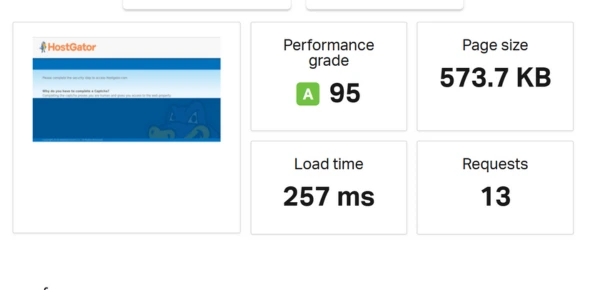
HostGator’s performance was evaluated using GT Metrix and Pingdom on a standard WordPress setup, tested multiple times across different locations.
The collected averages showed slower delivery than what modern websites typically require. Applying no performance enhancements, the results suggested that HostGator’s base-level speed falls short of current industry standards.
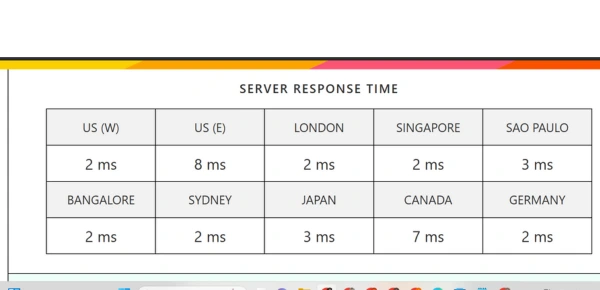
Uptime Tests
Uptime is a vital consideration when selecting hosting services.
While HostGator commits to maintaining 99.90% uptime, long-term monitoring from Pingdom reveals a slightly lower real-world performance of 99.89%, showing it has not consistently met its own reliability standard.
Can HostGator Handle High Traffic?
HostGator can manage significant traffic levels, though performance varies by plan. Shared hosting supports moderate visitor loads if websites are efficiently coded. For consistent, high-volume traffic, VPS and dedicated servers provide dedicated resources, faster storage, and more powerful processors.
Upgrading from shared hosting to VPS or dedicated plans ensures stability and scalability as traffic increases.
Is HostGator Really Unlimited Hosting?
HostGator’s “unlimited” hosting plans are not truly limitless. The term mainly refers to unmetered disk space and bandwidth, but practical limits exist to maintain server stability for all users in a shared environment.
These constraints include CPU usage, RAM, the number of files (inodes), and email sending limits (usually capped at 500 per hour). Excessive usage can lead to throttling, slower performance, account warnings, or the need to upgrade to VPS or dedicated hosting.
This model works well for personal blogs, small business websites, or standard web projects with moderate traffic and resource demands. High-traffic websites, large eCommerce platforms, or resource-heavy applications may quickly reach these limits, making shared “unlimited” hosting less suitable.
HostGator’s Fair Usage Policy clearly outlines what constitutes excessive use, ensuring transparency and helping users avoid unexpected issues. Reviewing these terms is essential for understanding the practical boundaries of the plan.
Key Takeaways:
- Suitable for small to medium websites with moderate traffic
- Limits exist on CPU, RAM, inodes, and email sending despite the “unlimited” label
- High-traffic or resource-intensive sites should consider VPS or dedicated hosting
- Understanding the fair usage policy helps prevent throttling or account problems
Common Performance Complaints & Reality
Common Performance Complaints
Many users raise concerns about speed and stability, especially on entry-level plans. A common issue is a slow initial server response, which can affect SEO and user experience. This is mainly linked to older server setups used on basic hosting packages.
Another frequent complaint is unexpected downtime. Even though uptime promises look good on paper, real-world usage sometimes shows short but repeated outages.
Shared hosting customers also report resource limits. When traffic increases suddenly, websites may slow down or show server errors because CPU and memory usage are tightly controlled.
Support delays are also mentioned often. Some users experience long wait times when trying to resolve technical or performance-related problems, especially for advanced issues.
Performance Reality
Performance depends heavily on the type of website. Small blogs or simple static sites usually run smoothly and load fast enough for normal visitors.
Higher-level WordPress plans perform noticeably better because they include built-in optimization tools like caching and content delivery features, which help reduce load times.
However, shared hosting has clear limits. As a site grows, upgrading becomes necessary earlier than some users expect to maintain consistent speed.
The final performance outcome often depends on the user. By enabling caching, utilizing updated PHP versions, and optimizing images, website owners can significantly enhance speed, even on basic plans.
Feature Area | HostGator (Reality) | Top Competitors |
Server Tech | Older infrastructure | Modern, faster systems |
Migration | Paid or manual | Usually free |
Renewals | High increase after the term | Similar industry trend |
Security & Backups
Security
HostGator provides a basic security framework, but the default does not include several important protections. Key tools such as spam and malware protection require additional payment, which reduces the overall value of the standard shared hosting plans.
While the security measures may work for small or low-risk websites, they are less suitable for projects that handle sensitive data or expect growth. Compared to competitors that bundle stronger security features into their core plans, HostGator appears less proactive in this area.
As a result, it is more appropriate for users focused primarily on low cost rather than long-term scalability or advanced protection.
Security Aspect | HostGator |
Free SSL | Yes |
Backups | Weekly |
Firewall & DDoS | Yes |
Spam Protection | Paid |
Malware Protection | Paid |
Bot / Brute Force | Yes |
24/7 Monitoring | Yes |
WP Security Plugin | No |
Backups
HostGator’s standard hosting plans provide limited and unreliable backup coverage. Automated backups are performed infrequently, are not assured, and place responsibility on the user rather than the provider.
Full backup protection is primarily positioned as a paid add-on, increasing overall costs for customers who require dependable data recovery.
When measured against competitors that include consistent daily backups as part of their core services, HostGator’s backup approach appears underdeveloped and less user-friendly.
Included Security Features
HostGator provides a baseline security framework across most hosting plans, focusing on essential protection rather than fully managed threat prevention.
Standard coverage includes encrypted connections through SSL, infrastructure safeguards against traffic-based attacks, and multiple account verification layers to prevent unauthorized access.
Data centers and servers are protected through internal firewall policies and controlled environments. More comprehensive protections—such as automated malware cleanup, routine backups, and advanced web application defenses—are typically reserved for premium plans or offered as paid enhancements rather than being part of the default package.
Paid Add-ons for Extra Protection – HostGator
- SiteLock Security: Daily malware scans, automatic threat removal, DDoS protection, and PCI compliance for safer websites.
- CodeGuard Backups: Automated daily cloud backups with easy one-click restore and version control.
- Domain Privacy & Protection: Hides WHOIS details and monitors domains for malware, DNS changes, and blacklisting.
- Domain Expiration Shield: Prevents domain loss by extending renewal time during payment failures.
- Premium SSL Certificates: Advanced SSL options with stronger encryption, warranties, and trust indicators.
- Jetpack Security (WordPress): Real-time backups, brute-force protection, spam filtering, and uptime monitoring.
- Dedicated IP Address: Provides a unique server identity for stable SSL performance and better email reputation.
Is HostGator Safe?
HostGator provides essential security measures suitable for most websites, including free SSL certificates, network-level DDoS mitigation, and server firewalls. It’s managed WordPress hosting adds extra protection through malware scanning and automated security features.
While these safeguards are adequate for small to medium sites, users who need advanced threat detection or proactive cleanup may need to purchase additional security services. Overall, HostGator offers a dependable baseline level of safety, though it does not match premium hosts focused exclusively on high-end security and performance.
Customer Support Reality
HostGator’s customer support shows inconsistent performance despite being important for beginner-focused users.
Although 24/7 help is advertised, some users report limited live chat availability and slow email responses. This lack of reliability can be a concern, especially when timely support is needed during technical issues.
Live Chat, Phone & Email Support – What to Expect
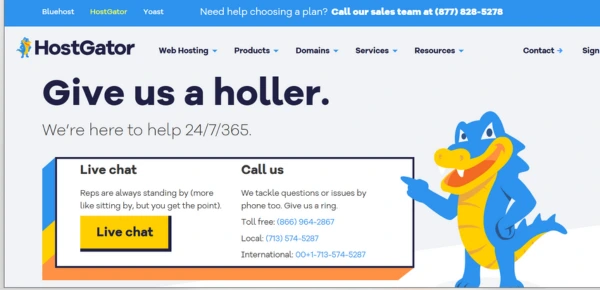
HostGator offers 24/7 customer support via live chat, phone, and email. Live chat responds in minutes, phone support provides direct help, and email handles detailed queries.
All channels are fast and reliable, ensuring users get timely help when needed.
Customer Support Options:
- 24/7 availability
- Live chat with responses usually under 2 minutes
- Phone support for direct help
- Email support for detailed queries
- Fast response times across all channels
Common Complaints & Trustpilot Reviews
Common Complaints
Users frequently report high renewal fees, hidden charges, and slower performance on shared plans using older technology.
Support can be inconsistent for complex issues, and some features—like automatic backups—are limited. Despite claims of “unlimited” resources, restrictions may apply, causing occasional dissatisfaction.
Trustpilot Reviews
On Trustpilot, customers highlight helpful staff and fast live chat support for simple issues.
However, many reviews mention the cost of renewals and additional add-ons, suggesting that while HostGator is convenient for basic hosting, it can become expensive for long-term use.
How Fast & Helpful is Support in 2026?
In 2026, HostGator’s support is generally fast and more technically capable than in previous years.
Live chat often connects users to agents within 1–2 minutes, with many technical issues resolved in under 15 minutes, though some wait times can exceed 30 minutes.
Support is available 24/7 via chat, phone, and a detailed knowledge base.
While agents handle complex problems efficiently, aggressive upselling and inconsistent service quality remain notable drawbacks.
Overall, the support is satisfactory for beginners seeking quick help, but may frustrate users needing advanced, specialized help.
Feature | 2026 Performance |
Live Chat | Fast (<2 mins) |
Knowledge | Improved, handles complex issues |
Channels | 24/7 chat, phone, knowledge base |
Drawbacks | Upselling, inconsistent service |
HostGator vs Competitors
In 2026, HostGator remains competitive with strong customer support and built-in security, but rivals like Hostinger offer better speed and pricing, while GoDaddy focuses more on business tools at a higher cost.
HostGator vs Hostinger
In 2026, Hostinger is usually seen as the better option for users who want speed, modern tools, and lower long-term costs. It focuses on performance and ease of use, which makes it attractive for new websites and growing projects. HostGator, however, still appeals to users who value strong, always-available customer support and a more traditional hosting setup.
Quick points:
- Hostinger delivers faster loading times and better overall value
- HostGator stands out for its reliable 24/7 live chat and phone support
- Hostinger is easier for beginners because of its clean, modern control panel
HostGator vs GoDaddy
When compared with GoDaddy, HostGator is often the more budget-friendly and beginner-focused choice. It includes essential security features without extra charges and offers better performance for standard websites. GoDaddy targets business users who want many built-in services, but this usually comes with higher costs and a more complex dashboard.
Quick points:
- HostGator is cheaper and simpler for new users
- It offers better default security and a more consistent speed
- GoDaddy is better suited for businesses needing extra tools, but at a higher price
Overall Comparison
- Best overall performance & value: Hostinger
- Best customer support: HostGator
- Best for beginners: Hostinger
- Best basic security without add-ons: HostGator
Which Hosting Type is Best for Beginners & Small Websites?
For anyone starting a small website, shared hosting stands out as the most practical and cost-effective choice. It combines all necessary tools on a single server, saving beginners from the hassle of handling technical details. Its affordability, easy setup, and low maintenance make it a go-to option for websites with limited traffic.
Those planning to launch a WordPress site might find Managed WordPress Hosting even more convenient, as it offers tailored performance and automated updates. Over time, when a site’s audience or technical needs expand, upgrading to VPS or Cloud Hosting can provide more power and flexibility.
In short, start small with shared or managed WordPress hosting, and move to advanced plans only as your website grows.
Hosting vs Cloud Hosting – Which to Choose?
Traditional hosting suits small or low-traffic sites needing low cost and simplicity, but lacks scalability and reliability. Cloud hosting is better for growing or high-traffic websites, offering flexibility, uptime, and performance through multiple servers, but at a higher cost.
Choose traditional hosting for basic needs and cloud hosting for expansion or better stability; a VPS can serve as a balanced option.
Pros & Cons of HostGator
Pros
- Strong uptime performance ensures websites run consistently, with compensation offered if reliability standards are not met
- Risk-free trial period that allows users to test the service before fully committing
- Multiple payment choices, giving users the freedom to pay monthly or save more with long-term plans
- Beginner-friendly site transfer service that helps move an existing website without extra cost during the early signup period
Cons
- Month-to-month plans are noticeably more expensive compared to discounted long-term subscriptions
- Extra features are often added by default during checkout, requiring users to manually remove services they may not need
Summary:
HostGator is a beginner-friendly web hosting service that offers affordable plans, free domain options, and easy WordPress setup. Its performance can be inconsistent, with occasional slow loading and downtime, but it’s suitable for small websites and new users.
Strengths You Should Know
HostGator is a budget-friendly hosting provider that works well for beginners and small websites. It offers affordable plans with useful free features and an easy-to-use setup. The platform is simple to manage, provides reliable uptime, and includes 24/7 customer support. As your site grows, you can easily upgrade to higher hosting plans or change providers.
Weaknesses & Limitations – HostGator
HostGator is affordable and beginner-friendly, but struggles with performance and reliability. Users report inconsistent uptime, slow load speeds from older servers, and higher latency for international visitors.
Its pricing and upselling practices can be misleading, with low initial rates requiring long-term commitments and costly renewals. Backup and security features are limited, with weekly overwrites and paid restoration, and some sites score poorly in security checks.
Support can be slow and inconsistent, and shared hosting plans have strict resource limits and basic security tools. Overall, HostGator works for minor projects but is less ideal for high-traffic or business-critical websites.
HostGator Review: FAQs
Is HostGator Any Good?
HostGator is a budget-friendly hosting service ideal for small sites and newcomers. It provides valuable features such as generous storage, easy WordPress setup, and round-the-clock help, though its performance and renewal costs may not suit advanced users.
Why is HostGator So Slow Sometimes?
HostGator’s shared hosting setup often leads to slower performance because many websites draw from the same limited server resources. Heavy usage or sudden traffic surges on one site can disrupt overall stability, causing speed drops for neighboring sites.
H3: Can You Build a Website on HostGator?
Yes, HostGator allows users to easily create websites through its built-in website builder or WordPress integration, offering templates, design tools, and hosting support for both beginners and advanced users.
Does HostGator Sell Domain Names?
HostGator lets users buy and manage domain names on its platform and supports common extensions like .com, .org, and. Net offers domain transfers and privacy protection, and includes a free domain with some long-term hosting plans.
Which Hosting Type Should You Choose?
Choose Shared Hosting for small or new sites, Cloud Hosting for growing platforms, VPS Hosting for more control, and Dedicated Hosting for large businesses needing maximum performance.
Is HostGator Suitable for SEO?
HostGator provides stable uptime and essential optimization tools, making it a reliable choice for SEO beginners. However, its performance and search visibility largely depend on the chosen hosting plan and the website’s optimization.
Conclusion: HostGator Review
HostGator provides cost-effective hosting suitable for beginners and small businesses, but its performance and support fall short of expectations. Frequent slowdowns and site crashes can harm a brand’s online presence, making it less dependable for long-term reliability.
After switching to WPX, the reviewer experienced faster performance, consistent uptime, and exceptional customer support that justified the higher price.

Alex Bryant, founder of PvyEmpire.com, is passionate about WordPress and specializes in web hosting, performance optimization, and site management. With extensive experience testing top hosting providers, he created PvyEmpire.com to share honest, data-backed reviews, expert guides, and verified coupons & deals, helping website owners save money, boost performance, and grow their online presence with confidence.