Top 10 HIPAA-Compliant Hosting Providers
If you’ve ever tried to find a hosting solution for a healthcare app or medical platform, you already know how overwhelming it can get.
There’s so much at stake — patient data, legal compliance, and the very real fear of getting something wrong. One mistake, and you’re not just looking at a technical problem; you’re looking at serious legal trouble and broken trust.
That’s exactly why this post breaks down everything you need to know about HIPAA-Compliant Hosting — in plain English, no confusing jargon.
Whether you’re a startup building your first health app or an established practice moving to the cloud, you’ll walk away knowing what to look for, what to avoid, and how to make a confident, informed decision.
HIPAA-Compliant Hosting: Brief Overview

When people talk about HIPAA-compliant hosting, they’re referring to a hosting environment specifically built to protect sensitive patient data according to federal law. It’s not just about having a secure server. It’s about meeting a very specific set of technical, administrative, and physical requirements that HIPAA demands.
Think of it like this: regular web hosting is a standard apartment building. HIPAA-compliant hosting is a secure facility with ID checks at the door, cameras in every hallway, encrypted filing cabinets, and a detailed log of everyone who ever walked in. The stakes are different and so is the infrastructure.
What is HIPAA Hosting?
HIPAA hosting is a type of cloud or server environment that’s configured to store, process, or transmit protected health information (PHI) — or its digital form, electronic PHI (ePHI) — without violating the HIPAA Security Rule.
Any business that touches patient data, from telehealth platforms to EHR systems, falls under this requirement. That includes your hosting provider, too, which is why signing a business associate agreement (BAA) with them is non-negotiable.
The HIPAA Security Rule, reinforced by HITECH, doesn’t just ask providers to “be secure.” It lays out specific safeguards across three categories: administrative, technical, and physical. A hosting provider that checks all three boxes can legitimately call itself part of a compliant infrastructure.
However, it’s worth saying clearly — the provider being compliant doesn’t automatically make your application compliant. That responsibility sits with you, too.
What to Look for in a HIPAA-Compliant Hosting Provider
Choosing a hosting provider for healthcare data isn’t like picking a plan based on storage and price. You’re evaluating a partner who will share legal responsibility for how patient data is handled. The wrong choice can expose your organization to OCR investigations, breach notifications, and serious financial penalties.
Before you sign anything, make sure the provider offers a signed BAA, has documented security controls, and can show audit-ready evidence of compliance. Beyond that, dig into how they handle each of the three HIPAA safeguard categories.
Administrative Safeguards
Administrative safeguards are the policies and procedures that govern how a hosting provider manages risk. This includes things like workforce training, security officer assignments, and formal risk assessment processes.
A solid provider will have a documented risk management program and clear procedures for responding to a security incident.
Technical Safeguards
This is where the infrastructure details really matter. Look for AES-256 encryption at rest and TLS 1.2 (or higher) for encryption in transit. The provider should offer audit logging, role-based access control (RBAC), and multi-factor authentication (MFA).
You also want to see support for automatic data backup, disaster recovery, and defined RPO/RTO objectives so you know how quickly systems can be restored after an incident.
Physical Safeguards
Physical safeguards cover the actual data centers where your data lives. This means restricted facility access, surveillance systems, hardware disposal procedures, and workstation controls.
Reputable providers use Tier III or Tier IV data centers with 24/7 physical security. It sounds basic, but it’s a formal HIPAA requirement under 45 CFR §164.312, and skipping the verification is a common mistake.
Specialty Web Hosts
Not every hosting provider can handle healthcare data, and that’s fine. But a growing category of specialty hosts has emerged specifically for regulated industries. These aren’t general-purpose cloud platforms that bolt on compliance as an afterthought. They’re built from the ground up with PHI storage in mind.
Providers like Aptible, MedStack, Atlantic.net, and ClearDATA fall into this category. They typically offer managed service environments where compliance controls are pre-configured, BAAs are standard, and support teams actually understand HIPAA.
For healthcare startups and digital health companies that don’t have a full DevOps team, this kind of managed compliance can save enormous time and reduce risk significantly.
“Framework Fortresses”
Some providers go well beyond HIPAA and hold certifications across multiple compliance frameworks. These are what you might call “framework fortresses” — platforms where regulatory compliance is baked into every layer of the infrastructure.
If your organization also needs to meet SOC 2 Type II, FedRAMP High, ISO 27001, HITRUST R2, or NIST 800-53 requirements, these providers are worth a serious look.
AWS, Microsoft Azure, and Google Cloud Platform are the most well-known examples. They maintain a shared responsibility model, meaning they secure the underlying infrastructure while you secure what runs on top of it.
Frameworks like CSA STAR and NIST CSF further validate their security posture. For healthcare IT consultants and enterprise health tech developers, these multi-framework certifications provide a strong compliance foundation to build on.
Top 10 Leading HIPAA-Compliant Hosting Providers
Choosing the right HIPAA-compliant hosting provider depends on your team size, technical maturity, and budget. Here’s a practical breakdown of the top options across different categories.
The list below covers everything from enterprise-grade cloud giants to specialty PaaS platforms built exclusively for regulated healthcare environments. Each has its own strengths and the right fit depends on your specific use case.
Atlantic.net

Atlantic.net is one of the longest-standing HIPAA-focused hosting providers in the market. They offer dedicated servers, VPS hosting, and cloud infrastructure — all backed by a signed BAA.
Their data centers are SOC 2 Type II audited, and they provide 24/7 support from teams who actually know healthcare compliance. For small to mid-sized healthcare organizations, Atlantic.net delivers solid value without the complexity of a hyperscale cloud provider.
Microsoft Azure
Azure is a top choice for enterprises that need both HIPAA compliance and broad framework coverage. Microsoft signs BAAs as part of its standard Online Services Terms, and Azure’s compliance portfolio includes FedRAMP High, ISO 27001, SOC 2 Type II, and HITRUST CSF.
It supports container hosting, Kubernetes deployments, and VPC-level network isolation. Azure also offers strong secrets management and built-in identity controls — including MFA and RBAC — making it a serious option for large health tech teams.
Amazon Web Services (AWS)
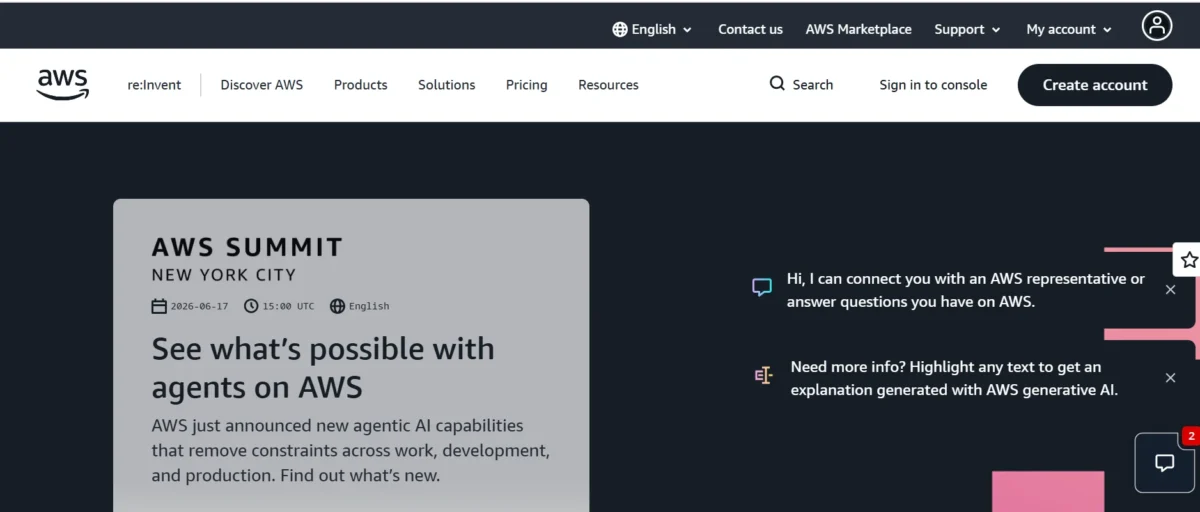
AWS is arguably the most widely used regulated cloud infrastructure in the healthcare space. It offers a signed BAA and supports over 150 services under its HIPAA-eligible program.
Tools like AWS Elastic Disaster Recovery, AWS Shield for DDoS protection, and CloudTrail for audit logging make it a comprehensive platform for EHR integration and telehealth applications.
Keep in mind, though — AWS being HIPAA-eligible doesn’t make your app compliant by default. You still need to configure services correctly.
Liquid Web
Liquid Web is a strong contender for healthcare businesses that prefer managed dedicated hosting over the complexity of a hyperscale cloud. They offer HIPAA-compliant dedicated servers and managed cloud solutions with a signed BAA.
Their support team is known for fast response times, and their infrastructure includes intrusion detection, vulnerability scanning, and nightly data backups. For medical practices and mid-market healthcare companies, Liquid Web hits a practical sweet spot between control and managed support.
Rackspace
Rackspace operates as a managed service provider (MSP) that sits on top of major cloud platforms, including AWS, Azure, and GCP. They offer HIPAA-compliant managed cloud services and take on significant operational responsibility — handling patching, monitoring, and compliance documentation.
If your team doesn’t have in-house DevOps expertise, Rackspace’s “Fanatical Support” model can ease the burden of maintaining a compliant environment. They also provide multi-cloud options for organizations that want flexibility.
Aptible – For Regulated Industries
Aptible is a PaaS platform designed specifically for regulated industries. It automates much of the compliance heavy lifting — generating audit logs, enforcing access controls, and providing documentation that maps directly to HIPAA requirements.
Developers love it because it fits into modern CI/CD workflows without sacrificing compliance posture. For healthcare startups building on containers, Aptible is one of the cleanest paths to a compliant deployment environment without standing up your own infrastructure.
TrueVault – Compliance & Data Privacy First
TrueVault focuses squarely on PHI storage and data privacy. It’s built as a HIPAA-compliant data store and API layer, making it ideal for applications that need to collect, store, and retrieve sensitive healthcare data securely.
TrueVault handles encryption, access controls, and audit logging at the data layer — so your developers can focus on building features rather than managing compliance controls. It’s a solid fit for digital health companies that need a secure PHI storage platform without managing a full cloud environment.
MedStack – Digital Health Focused
MedStack is a Canadian-born platform built exclusively for digital health companies. It provides a fully managed, HIPAA and PIPEDA-compliant cloud environment with pre-configured security controls and a signed BAA.
What sets MedStack apart is its deep focus on the specific needs of health tech developers — including FHIR-compatible infrastructure and compliance documentation that maps to both US and Canadian regulatory frameworks.
For teams building patient-facing health apps, MedStack removes a huge compliance burden from day one.
Vercel – Serverless Hosting
Vercel is primarily known as a front-end deployment platform, but the question of whether it’s HIPAA compliant comes up often. Vercel does offer a signed BAA on its Enterprise plan and supports HTTPS/TLS encryption in transit.
However, it’s important to understand its scope — Vercel handles the delivery layer, not PHI storage. If your application architecture routes sensitive patient data through Vercel’s edge network, you need to evaluate that carefully. It’s best suited for the front-end layer of a health app, combined with a PHI-compliant backend.
AWS Amplify – Amazon’s PaaS Offering
AWS Amplify is Amazon’s managed PaaS offering for building full-stack web and mobile applications. Since it runs on top of AWS infrastructure, it inherits the same HIPAA eligibility — provided you configure it correctly and have a BAA in place with AWS.
Amplify supports authentication, storage, and API management out of the box. For health tech developers who want to move fast without building cloud infrastructure from scratch, Amplify offers a practical middle ground — though careful architecture review is essential before storing any ePHI.
Common Mistakes
Even with the right hosting provider in place, plenty of teams still fall short of true HIPAA compliance. The mistakes usually aren’t dramatic. They’re the quiet, easy-to-overlook gaps that only surface during an audit — or worse, after a breach.
Understanding where things typically go wrong is just as valuable as knowing what to do right. Here are the most common pitfalls.
Assuming BAA = Compliance
Signing a business associate agreement with your hosting provider is a legal requirement but it isn’t a compliance certificate. The BAA defines shared responsibilities — it doesn’t guarantee your application is configured correctly.
Many teams check the BAA box and move on, assuming they’re covered. They’re not. Compliance requires active, ongoing effort on your side of the shared responsibility model.
Logging PHI in Plain Text
This one happens more often than it should. Developers add logging to debug issues and accidentally capture patient data — names, diagnoses, medication details — in plain, unencrypted log files.
Under HIPAA, that’s a violation. All PHI must be encrypted at rest, and that includes log files. Review your logging configurations carefully and make sure sensitive fields are masked or excluded entirely.
Over-Permissioned Access
Role-based access control isn’t just a best practice — it’s a HIPAA requirement. Giving every team member admin-level access because it’s easier is a real risk.
If an account is compromised or an employee leaves, over-permissioned access becomes a liability fast. Apply the principle of least privilege: every user and service should only have access to what they actually need.
Missing Audit Trails
HIPAA requires that you track who accessed PHI, when, and what they did with it.
Without proper audit logging, you can’t answer those questions — and that’s a problem during an OCR investigation. Many platforms generate logs automatically, but if those logs aren’t retained for at least six years and aren’t tamper-evident, they may not satisfy HIPAA’s requirements under 45 CFR §164.312.
Ignoring the Application Layer
Your hosting provider secures the infrastructure. But what about your application? SQL injection vulnerabilities, weak session management, and unvalidated inputs can all expose PHI — regardless of how secure the server underneath is.
A web application firewall (WAF) helps, but it’s not a substitute for secure coding practices and regular penetration testing.
Using Real PHI in Non-Production Environments
Development and staging environments rarely have the same security controls as production. Using real patient data to test features — even temporarily — is a HIPAA violation waiting to happen.
Always use de-identified or synthetic data in non-production environments. It’s a simple rule that’s surprisingly easy to ignore under deadline pressure.
Compliance Tooling (Sprinto and Dash)
Tools like Sprinto and Dash can significantly simplify the compliance management process. Sprinto automates evidence collection, maps controls to HIPAA requirements, and keeps your compliance posture audit-ready in real time.
Dash focuses on streamlining security reviews and documentation. Neither tool replaces the work of building a secure system but they eliminate a lot of the manual overhead that makes ongoing compliance so exhausting for small teams.
Key Takeaway
HIPAA compliance is not a one-time event. It’s an ongoing process of configuration, monitoring, documentation, and review. Tools like Falco for runtime monitoring and HashiCorp Vault for secrets management can help you maintain that posture continuously.
The goal isn’t to pass an audit — it’s to build a system that genuinely protects patient data every single day.
Conclusion
Finding the right HIPAA-compliant hosting provider isn’t about picking the cheapest plan or the most recognizable brand.
It’s about understanding your specific needs — your tech stack, your team’s capabilities, your patient data volume — and matching those to a provider that can genuinely support a secure, audit-ready environment.
Whether you go with an enterprise giant like AWS or Azure, or a specialty platform like Aptible or MedStack, the right fit exists. You just need to know what to look for.
Above all, remember that hosting is only one part of the compliance picture. The way you build your application, manage access, handle logs, and respond to incidents matters just as much as the infrastructure underneath it.
Treat compliance as an ongoing practice — not a checkbox — and you’ll build something that actually protects the patients who trust you with their most sensitive information.
FAQs
What is HIPAA-compliant hosting?
It’s a hosting environment configured to store and process protected health information (PHI) in accordance with the HIPAA Security Rule. It requires specific technical, administrative, and physical safeguards — plus a signed BAA with the provider.
Do I need HIPAA hosting for my healthcare app?
If your app collects, stores, or transmits any form of PHI or ePHI — yes, you do. This applies to telehealth platforms, EHR systems, patient portals, and any other tool that touches sensitive health data.
Is AWS HIPAA compliant by default?
No. AWS offers a HIPAA-eligible infrastructure and will sign a BAA but your services and configurations must be set up correctly. HIPAA compliance on AWS is a shared responsibility — AWS secures the cloud, you secure what’s in it.
What does a BAA actually cover?
A BAA is a legal contract that defines how a business associate (like your hosting provider) will handle PHI on your behalf. It outlines security obligations, breach notification responsibilities, and data handling rules — but it doesn’t guarantee compliance on its own.
Can I use shared hosting for HIPAA?
Generally, no. Shared hosting environments don’t provide the level of isolation, access control, or auditability that HIPAA requires. Dedicated servers, VPS hosting, or private cloud environments are far more appropriate for handling PHI.
What’s the difference between HIPAA compliant and HIPAA certified?
There’s no official “HIPAA certification.” Any provider claiming to be certified is using marketing language. What actually matters is whether they sign a BAA, implement the required safeguards, and can provide documented evidence of their security controls.
How long must HIPAA audit logs be retained?
HIPAA requires that audit logs and related documentation be retained for a minimum of six years from the date of creation or the date they were last in effect — whichever is longer.
Related Posts
- Best Enterprise Hosting Services: Complete Guide
- 10 Best CMS Hosting Providers
- eCommerce Hosting: What It Is and How It Works?
- What Is NodeJS Hosting and How Does It Work?
- What Is Windows Hosting? Complete Beginner Guide
- What Is Linux Hosting? Complete Beginner’s Guide

Alex Bryant is the founder of PvyEmpire.com and a WordPress specialist with over 4 years of hands-on experience in web hosting, performance optimization, and website management. He has extensively tested top hosting providers by setting up real websites and monitoring their speed, uptime, and reliability.
At PvyEmpire.com, Alex publishes honest, data-driven reviews, detailed guides, and verified coupons & deals. His goal is to help website owners choose the right hosting, improve performance, and grow their online presence with confidence—based on real testing, not promotions.