PCI Compliant Hosting: Everything You Need to Know
If you’re running an online business that handles customer payments, there’s always that small worry in the back of your mind—“Is my data really secure enough?”
One mistake or security gap can lead to lost trust, fines, or even data breaches. That’s why many people start searching for PCI Compliant Hosting when they realize standard hosting may not be enough for payment security.
In this blog, we’ll break down what PCI Compliant Hosting actually means and why it matters for any business that processes credit card information.
You’ll also learn how it helps protect customer data, meet security standards, and avoid compliance risks without overcomplicating things. By the end, you’ll have a clear idea of whether it’s the right choice for your website.
TL, DR:

If your website processes credit card payments, security is not optional anymore. A single weak point can expose cardholder data and damage trust instantly. That is where pci compliant hosting becomes essential for protecting transactions and meeting strict industry standards.
In simple terms, PCI-compliant hosting ensures your server environment follows the Payment Card Industry Data Security Standard (PCI DSS). In this guide, you will understand how it works, why it matters, who needs it, and how providers help you stay compliant without overwhelming technical complexity.
What is PCI-compliant hosting?
PCI-compliant hosting refers to a secure hosting environment designed to meet PCI DSS requirements set by the PCI Security Standards Council. It focuses on protecting cardholder data such as PANs, CVV values, and transaction records using strict security controls.
In practice, pci compliant hosting means your hosting provider implements safeguards like encryption, access control, and vulnerability management. These controls reduce the risk of data breaches during payment processing.
Unlike standard hosting, pci compliant web hosting is built specifically for environments where financial data is processed or stored. It ensures that systems handling payment card industry data security standard requirements are continuously monitored and hardened against attacks.
Why do you need PCI DSS-compliant hosting?
If you accept online payments, PCI DSS-compliant hosting is not optional—it is a requirement. The PCI DSS framework enforces 12 core security requirements that protect cardholder data during storage and transmission.
Many businesses think basic shared hosting is enough, but shared environments often lack strict isolation. This creates risk in multi-tenant infrastructure, where one compromised account can affect others.
Using PCI DSS-compliant hosting helps you reduce exposure, especially when dealing with card data processing, encryption, and secure authentication systems. It also supports compliance during audits like SAQ or ROC.
How it works
PCI-compliant hosting works by applying layered security across infrastructure, network, and application levels. Hosting providers implement firewalls, intrusion detection systems, and encrypted communication channels.
The system also limits PCI scope using techniques like tokenisation and hosted payment pages. This means sensitive card data never directly touches your server in many setups.
Regular security testing, including quarterly vulnerability scans by an Approved Scanning Vendor (ASV) and penetration testing, ensures ongoing compliance. This continuous validation keeps your environment aligned with PCI DSS standards.
Why it matters
Security breaches involving payment data can destroy customer trust and lead to heavy penalties. PCI compliance reduces that risk by enforcing strict controls around access, encryption, and monitoring.
It also simplifies audits and reporting. Businesses can generate compliance evidence through SAQ or ROC processes without rebuilding infrastructure every year.
In real-world terms, pci compliant hosting acts like a security checkpoint. Every transaction passes through controlled systems that verify, encrypt, and protect data before it moves further.
With PXP
Platforms like PXP help businesses handle PCI requirements through an integrated payment infrastructure. Instead of building compliance from scratch, merchants can rely on secure payment processing systems.
PXP and similar providers reduce PCI scope by managing sensitive data externally. This allows businesses to focus on operations while maintaining compliance with PCI DSS standards.
PCI-Compliant Web Hosting Plans
PCI-compliant web hosting plans are structured to meet different business needs, from small e-commerce sites to enterprise-level platforms. These plans often include built-in security tools and compliance-ready configurations.
They also ensure proper isolation, encryption, and monitoring across infrastructure layers. This makes it easier for businesses to maintain PCI DSS compliance without managing every technical detail manually.
Top PCI Hosting Provider
A top PCI hosting provider typically offers managed security, compliance support, and continuous monitoring. These providers reduce the burden of audits and vulnerability management.
Most also include DDoS protection, WAF integration, and secure cloud environments. This combination ensures both performance and compliance stability.
PCI Compliant Hosting Services
PCI-compliant hosting services include different infrastructure models designed for varying security and scalability needs. These include cloud, dedicated, and fully managed environments.
Each model handles PCI DSS requirements differently but follows the same core principle: secure cardholder data processing with strict controls.
Cloud Hosting
PCI-compliant cloud hosting uses virtualized infrastructure from providers like AWS, Microsoft Azure, and Google Cloud. These platforms support strong encryption, identity access management, and scalable security controls.
However, using cloud hosting does not automatically make your system compliant. You still need proper configuration, monitoring, and adherence to PCI DSS responsibilities.
Dedicated Hosting
Dedicated hosting provides isolated hardware environments, making it easier to control PCI scope. Since resources are not shared, the risk from multi-tenant infrastructure is reduced significantly.
This model is often preferred for pci compliant dedicated server hosting because it allows tighter control over access, logging, and security policies.
Compliant Hosting
Compliant hosting focuses on delivering fully configured environments that already meet PCI DSS requirements. These systems include pre-hardened servers, monitoring tools, and compliance documentation support.
This approach is ideal for businesses that want fully managed pci compliant hosting without handling complex security setups internally.
Top 5 PCI-compliant web hosting providers
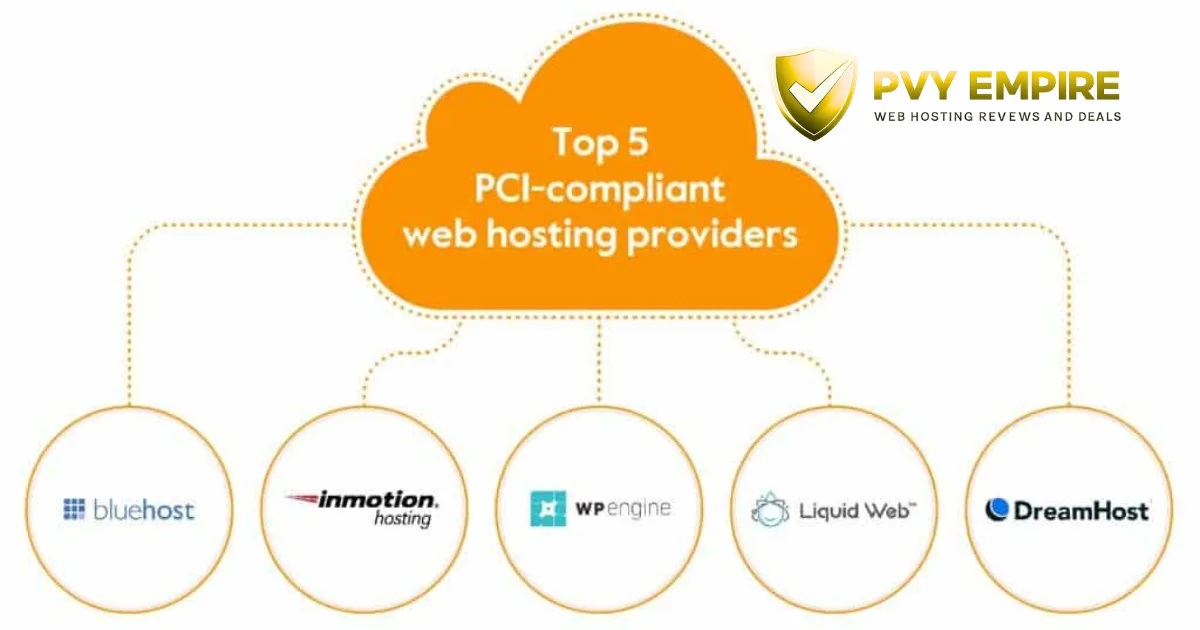
Choosing the right provider depends on security needs, scalability, and compliance support. Below are widely used options in the hosting industry.
Bluehost
Bluehost offers shared and VPS solutions that can be configured for PCI compliance with proper security hardening and third-party tools.
InMotion Hosting
InMotion Hosting provides VPS and dedicated hosting options suitable for e-commerce businesses needing stronger PCI DSS alignment.
WP Engine
WP Engine focuses on managed WordPress environments, often used for pci compliant wordpress hosting setups.
Liquid Web
Liquid Web offers high-performance dedicated and VPS hosting designed for compliance-heavy workloads.
DreamHost
DreamHost provides flexible hosting solutions that can support PCI-aligned configurations for small to medium businesses.
What steps is the hosting company following to ensure PCI compliance?
Hosting companies typically follow PCI DSS requirements such as encryption, firewall configuration, and secure authentication. They also undergo regular audits and vulnerability scans.
Many providers implement SOC 2 Type II controls alongside PCI frameworks to strengthen overall compliance posture. This ensures continuous monitoring and risk mitigation.
What are the responsibilities of the merchant and the hosting provider?
The hosting provider secures infrastructure, but merchants are responsible for application-level security. This includes secure coding, access control, and proper payment integration.
Understanding this shared responsibility model is critical to maintaining full PCI compliance.
Can the host provide third-party certification for PCI DSS compliance?
Yes, many providers undergo QSA audits and receive a Report on Compliance (ROC). However, merchants still must complete their own SAQ based on their setup.
Certification from the host does not automatically make the merchant fully compliant.
Benefits of Bare Metal Hosting for Enterprise IT
Bare metal hosting provides maximum performance and isolation. It is often used in enterprise environments where strict PCI scope control is required.
HIPAA-Compliant Hosting Requirements 2026 Healthcare Hosting Guide
HIPAA compliance focuses on healthcare data protection, but many security principles overlap with PCI DSS. Both require encryption, access control, and strict audit logging.
What Is PCI Compliance? 12 Requirements, PCI Levels, and Penalties
PCI DSS includes 12 core requirements covering secure networks, data protection, vulnerability management, and monitoring. Non-compliance can lead to fines, penalties, and loss of payment processing rights.
HIPAA Compliant Hosting Solutions
HIPAA hosting solutions and PCI environments share similar security infrastructure, such as encryption and intrusion detection systems. However, they apply to different regulated industries.
Who Should Use PCI hosting?
PCI hosting is ideal for e-commerce businesses, SaaS platforms, and any organization handling credit card transactions. It is especially important for merchants processing large payment volumes.
If your business stores, processes, or transmits cardholder data, you should consider PCI DSS-compliant hosting immediately.
Who Should NOT Use PCI hosting
Businesses that do not handle payments directly, such as informational blogs or portfolio websites, do not necessarily need PCI hosting. Over-investing in compliance-heavy infrastructure may not be cost-effective in such cases.
Conclusion.
PCI compliance is not just a technical requirement—it is a trust framework for online payments. Without it, you expose your business to security risks and regulatory penalties.
Choosing the right PCI-compliant hosting setup helps you secure transactions, reduce compliance scope, and build long-term customer confidence.
FAQs
What is PCI-compliant hosting?
It is a secure hosting environment that follows PCI DSS standards to protect cardholder data during transactions.
Is AWS PCI-compliant hosting enough?
No, cloud providers offer infrastructure, but you must still configure your environment to meet PCI requirements.
Is shared hosting PCI compliant?
Most shared hosting is not suitable for PCI environments due to limited isolation and control.
What is the difference between SAQ and ROC?
SAQ is a self-assessment for merchants, while ROC is a formal audit done by a QSA.
Do I need PCI hosting for small e-commerce sites?
Yes, if you accept card payments, even small stores must follow PCI DSS rules.
How does tokenisation help PCI compliance?
It replaces sensitive card data with tokens, reducing exposure and PCI scope.
How often is PCI compliance reviewed?
Most systems require annual validation and quarterly vulnerability scans.

Alex Bryant is the founder of PvyEmpire.com and a WordPress specialist with over 4 years of hands-on experience in web hosting, performance optimization, and website management. He has extensively tested top hosting providers by setting up real websites and monitoring their speed, uptime, and reliability.
At PvyEmpire.com, Alex publishes honest, data-driven reviews, detailed guides, and verified coupons & deals. His goal is to help website owners choose the right hosting, improve performance, and grow their online presence with confidence—based on real testing, not promotions.